
https://www.youtube.com/watch?v=vc9PyLoqcqQ
https://www.nature.com/articles/s41467-026-76668-0
A breakthrough in synthetic biology could pave the way for new biotechnological tools and medical applications.
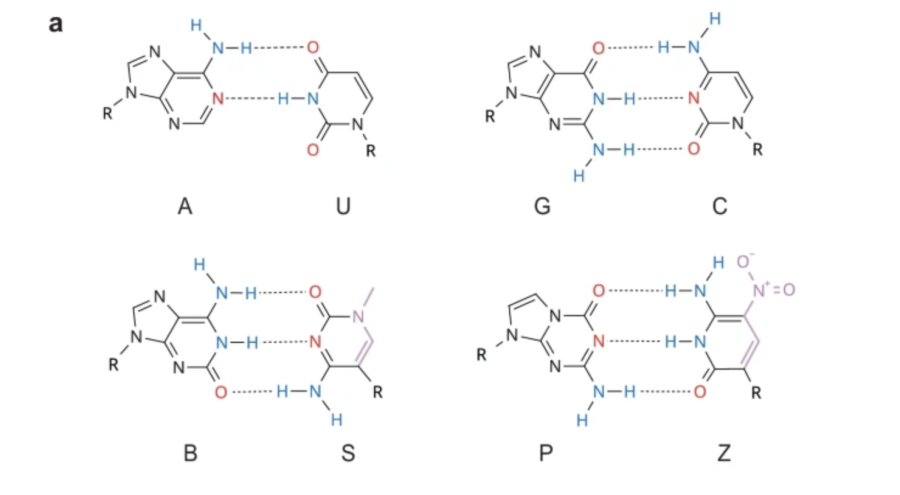
Researchers have demonstrated that RNA polymerase, the enzyme responsible for transcribing genetic information from DNA into RNA, can accurately read and transcribe an expanded genetic alphabet containing eight letters (hachimoji eight-letter alphabet) instead of the four found in natural DNA.
Using high-resolution cryo-electron microscopy, the research team uncovered how RNA polymerase recognizes synthetic DNA letters. Their findings revealed that the enzyme can process these artificial building blocks in a manner similar to its recognition of natural DNA letters.
This discovery provides new insights into how biological systems might accommodate expanded genetic information beyond the limits of the natural genetic code.
The findings represent an important step forward in synthetic biology, a field focused on designing and engineering biological systems with new or enhanced capabilities. In the future, expanded genetic alphabets could help researchers develop innovative biotechnological tools and potentially open new avenues for medical research.
By revealing the molecular mechanisms that enable RNA polymerase to recognize synthetic DNA letters, the study brings scientists closer to understanding how engineered genetic systems can function within biological machinery. 09/26

Des fleurs à "sang ou sève chaude"
Le monde des plantes offre parfois des ressemblances étonnantes avec le règne animal. La plus connue est sans conteste le phénomène des plantes carnivores, même si l'analogie est plutôt grossière et relève plus de l'imagination que des processus biologiques réels. Or s'il y a une manifestation où la ressemblance entre animaux et plantes est étonnante, c'est bien la thermogénèse: mécanismes grâce auxquels un organisme accumule de l'énergie thermique, ce qui élève sa température. Ceci se retrouve chez les animaux à sang chaud (oiseaux et mammifères) dont la température corporelle est constante.
Plusieurs plantes produisent de la chaleur, aussi bien sous les tropiques que dans les pays tempérés. Par exemple, au Canada, l'inflorescence du chou puant peut faire sa place dans la neige. Elle maintient sa température entre 21.3 et 25.9 °C, même quand la température ambiante dépasse -15°C, soit un écart de près de 40°C!
 Version imprimable